

In The Grizzled: Armistice Edition, a friendship can last longer than the hardship it helped someone endure. At the end of each campaign chapter, the hardships assigned to the soldiers are removed. Certain friendship benefits remain for every chapter that follows. A war story takes shape in that difference: the game chooses which consequences accompany these people into the next part of their lives.
Designed by Fabien Riffaud and Juan Rodríguez, The Grizzled puts players alongside one another as soldiers in the First World War. Armistice Edition extends their shared struggle across nine chapters, with an introductory tutorial. Players try to get through dangerous missions together by playing cards, deciding when to withdraw and helping companions recover. Its rulebook describes the game as an homage to people who lived through the period.
That ambition makes the campaign's choices about continuity worth examining. What does it preserve of the group's experience, and what does it let go?
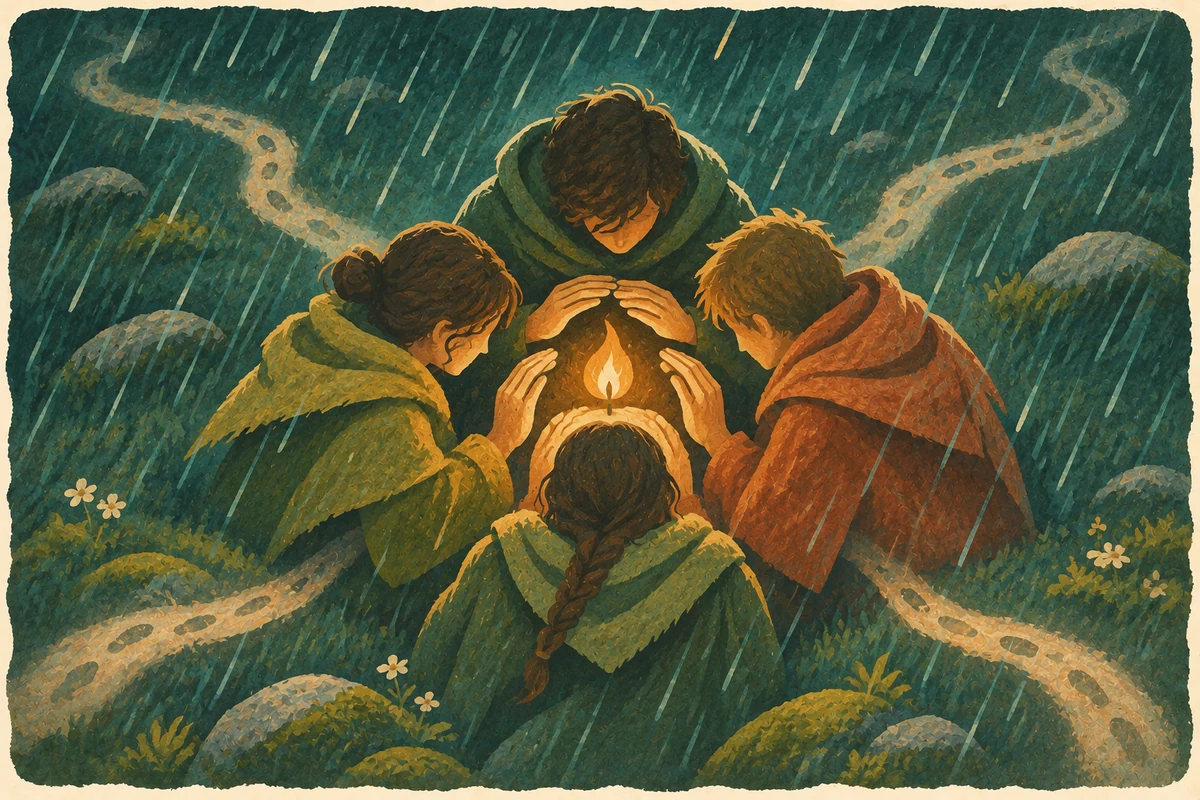
Leaving can help the people who stay
Each chapter contains successive missions. Players hold secret hands of Trial cards and try to work through the Trials deck before their Morale Reserve runs out. Threat cards enter a shared area, where three matching dangers, such as rain or shells, make the mission fail. Hard Knocks are the other kind of Trial: they attach to an individual soldier and impose difficulties that can restrict actions or add to the dangers facing everyone.
Successful missions clear the Threat cards played into the shared area. Failed missions return those cards to the deck to be faced again. To win the chapter, the group must empty that deck and everyone's hands after a successful mission. Getting a card out of your hand therefore matters, but playing one that causes failure can undo the progress others have made.
Withdrawal gives that responsibility an unusual form. A withdrawing player stops taking actions, and their Hard Knocks cease affecting the current mission. They may still have cards they wanted to play. Yet leaving can remove a danger that was making it harder for companions to continue.
It isn't a costless kindness. Unplayed cards remain in hand, and cards left in the group's hands help determine how much of the Morale Reserve moves into the Trials deck between missions. Leaving may protect the current attempt while making the remaining work harder to finish. The decision concerns how much pressure the group can bear now and how much it can afford to postpone.
Help has to reach someone
On withdrawing, a player also secretly selects a support tile, if they have one available, directing help toward another soldier. When the mission ends, the tiles are revealed. The soldier receiving more support than anyone else can shed Hard Knocks and recover their Good Luck Charm, an ability that removes a matching Threat card from the shared area.
After a successful mission, that recipient can remove up to two Hard Knocks. After failure, only support from players who already withdrew counts, and the recipient can remove one. Even a failed mission can therefore leave somebody better able to face the next one.
But a tie cancels the benefit. Several people can mean well and still help nobody. Armistice explicitly permits players to recommend who should receive support, although the tile each person chooses stays secret. There is room to discuss need and offer help while leaving the decision with the person making it.
This recovery happens before the check that ends the chapter if any one soldier has four or more Hard Knocks. Support can prevent an individual's accumulated burdens from becoming the group's defeat. It also restores an ability that may later protect everyone. Caring for a companion has consequences beyond that companion's next turn.
What survives the chapter
Within a chapter, Hard Knocks remain attached across missions unless removed. Across chapter boundaries, that continuity stops: all assigned Hard Knocks are cleared. The campaign doesn't simply build an ever-longer list of each soldier's afflictions.
Helping Hands follow a different pattern. These are advantages earned through the campaign, many of them usable only once. Friendship Helping Hands are the exception: they take effect immediately and remain in play through subsequent chapters. The instructions for saving the campaign even preserve the players' seating order so that friendship links survive when play resumes.
A relationship thus has a continuity that an assigned hardship does not. This is a practical system for carrying a campaign forward, but alongside the declared memorial purpose it also invites an interpretation: assistance belongs among the lasting consequences of the war. The campaign makes room to remember that someone helped, rather than recording only what someone suffered.
Loss can leave another kind of lasting change. After losing a chapter, the group may ban one Trial card from those still in hand or among the assigned Hard Knocks. That card will no longer trouble them in future chapters. It goes behind the Negative Points divider, worsening the campaign's final score.
The choice separates relief from an unqualified reward. Removing a recurring difficulty can make the road ahead easier, while the score retains a cost. These soldiers can gain a more manageable future without the campaign calling everything that led there a success.
A memorial with limits
Friendship and vulnerability were central to The Grizzled before Armistice added its campaign. In his essay on the original game's treatment of trauma, Greg Loring-Albright examines its attention to the effects of suffering on individual soldiers. Armistice adds a further question: which of those effects should remain mechanically present as the story advances?
Its answer is selective. Clearing Hard Knocks permits a fresh chapter; persistent friendship benefits give earlier help a future; banned Trials offer relief that still carries a scoring cost. Those rules don't establish that real suffering clears at a boundary, that friendship cures trauma or that everyone will find the experience moving. Their significance lies in the responsibilities and continuities they create within this particular game.
For someone drawn to a war story about companions, those are substantial things to explore. A choice to leave can give others room to continue. Help after failure can restore someone's capacity to act. Later chapters can still contain a benefit formed earlier between people. Armistice gives friendship a place in the future the group is struggling to reach.